Across the Water
Among the millions of Africans carried into slavery in the Americas were Muslims: people who could read, who fasted when they could, who wrote prayers in Arabic on whatever came to hand. Some of their pages survive.
How many
Nobody knows, and anyone who gives a confident percentage is guessing. The historians who have worked on the question longest, Sylviane Diouf, Michael Gomez and Allan Austin, agree on this much: Muslims were a significant minority of the people taken from West Africa, and their numbers cannot be known precisely.123
They came from Senegambia, Futa Toro and Futa Jallon, from the Niger bend and from Hausaland. Many had been to school. Some were teachers. One of the earliest people from the Muslim world known to have reached what is now the United States was an enslaved man from Azemmour in Morocco, called Estevanico in Spanish, who landed in Florida with a Spanish expedition in 1528. What he believed himself is not recorded.
Charleston
By a commonly cited estimate, as many as four in ten of the Africans brought to what became the United States first set foot on land at Charleston, South Carolina. Many were held in quarantine on Sullivan’s Island. Later ships unloaded at Gadsden’s Wharf, where the International African American Museum opened in June 2023.
Carolina’s wealth was rice. Historians such as Daniel Littlefield and Judith Carney have argued that planters prized, and profited from, the skills of people taken from the rice-growing coasts of West Africa. Other scholars doubt that buyers had so much choice.15 What is not in doubt is where the rice grew. By the middle of the 1800s Georgetown County, a short drive south of Myrtle Beach, was one of the leading rice-producing counties in the country, and every acre of it was worked by enslaved people.
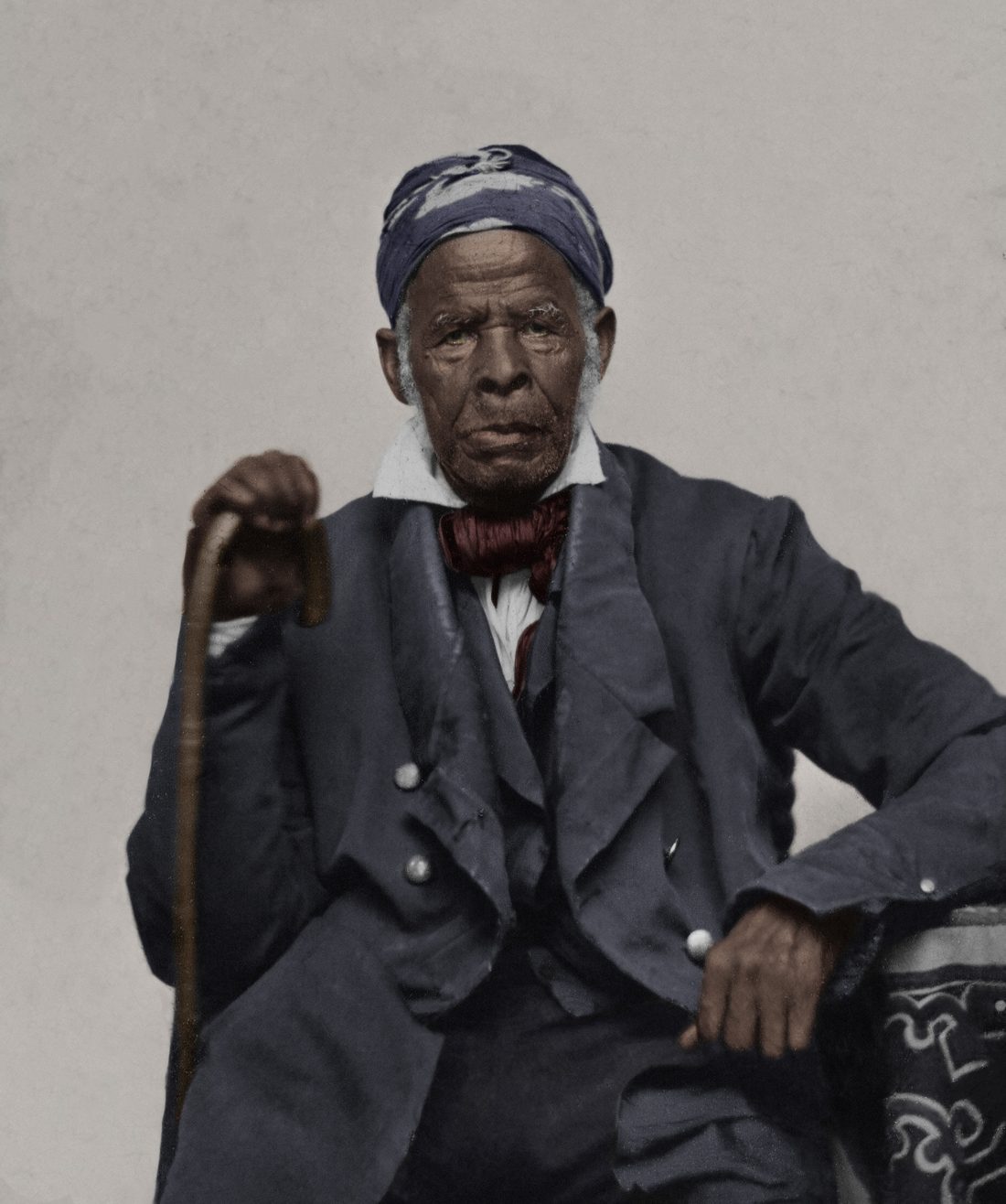
Omar ibn Said
Omar ibn Said was born about 1770 in Futa Toro, between the Senegal and Gambia rivers, the son of a wealthy man. He had spent many years as a student when, in 1807, at the age of thirty-seven, he was captured in a war, marched to the coast and put on a ship. A month later he was in Charleston.4
He was sold to a man he remembered as cruel, and he ran. He got as far as Fayetteville, North Carolina, where he was caught and jailed. He spent sixteen days there, and word got around, because the prisoner was writing on the walls of his cell with coals from the fire, in a script nobody in town could read. It was Arabic.45
He was taken into the household of James Owen of Bladen County, whose brother John became governor, and he stayed with that family until he died, probably in July 1863, an old man and still enslaved.
In 1831 he wrote the story of his life, in Arabic. The Library of Congress, which acquired his papers in 2017 and put them online in 2019, calls it the only known surviving autobiography of an enslaved person written in Arabic in America.4 Because it was in a language his owners could not read, nobody edited it. He opens it by writing out, from memory, verses from Surat al-Mulk, the chapter of the Quran that begins by declaring that dominion belongs to God.6
He was baptized and sat in a Presbyterian pew. The Library of Congress describes him as a convert. Scholars who have read what he kept writing in Arabic, page after page of Quran, think the matter is less settled than his owners believed. A state historical marker for him stands on Murchison Road in Fayetteville.5 An opera about his life, Omar, by Rhiannon Giddens and Michael Abels, opened in Charleston in May 2022 and won the Pulitzer Prize for Music the next year.7
Sapelo Island
Bilali Muhammad came from Futa Jallon, in what is now Guinea. On Sapelo Island, off the Georgia coast, he was the head driver of Thomas Spalding’s plantation, in charge of hundreds of people. Spalding wrote that during the War of 1812 he armed Bilali and his men to defend the island.
Bilali left a thirteen-page manuscript in Arabic, now kept at the University of Georgia.8 For years people called it his diary. It is something more remarkable: passages of Islamic law, on ablution and prayer, drawn mainly from the Risala of Ibn Abi Zayd of Kairouan. He had learned it as a boy in West Africa, and he wrote it down from memory on an island in Georgia.
His descendants are still there. Cornelia Walker Bailey, the writer and storyteller of the Hog Hammock community, who died in 2017, traced her family to him.9 In the 1930s, old people on Sapelo told interviewers what they remembered of their grandparents: that they knelt on a mat to pray at sunrise, at noon and at sunset, that they kept beads, and that on a certain day each year they made rice cakes called saraka and gave them to the children.10 The word is صدقة, sadaqah: charity.
A friend of his, Salih Bilali, born about 1765 in Massina in today’s Mali, was enslaved on the Couper family’s lands on St. Simons Island and at Hopeton on the mainland. His owner wrote that he read Arabic and kept the fast of Ramadan.14
Names we still have
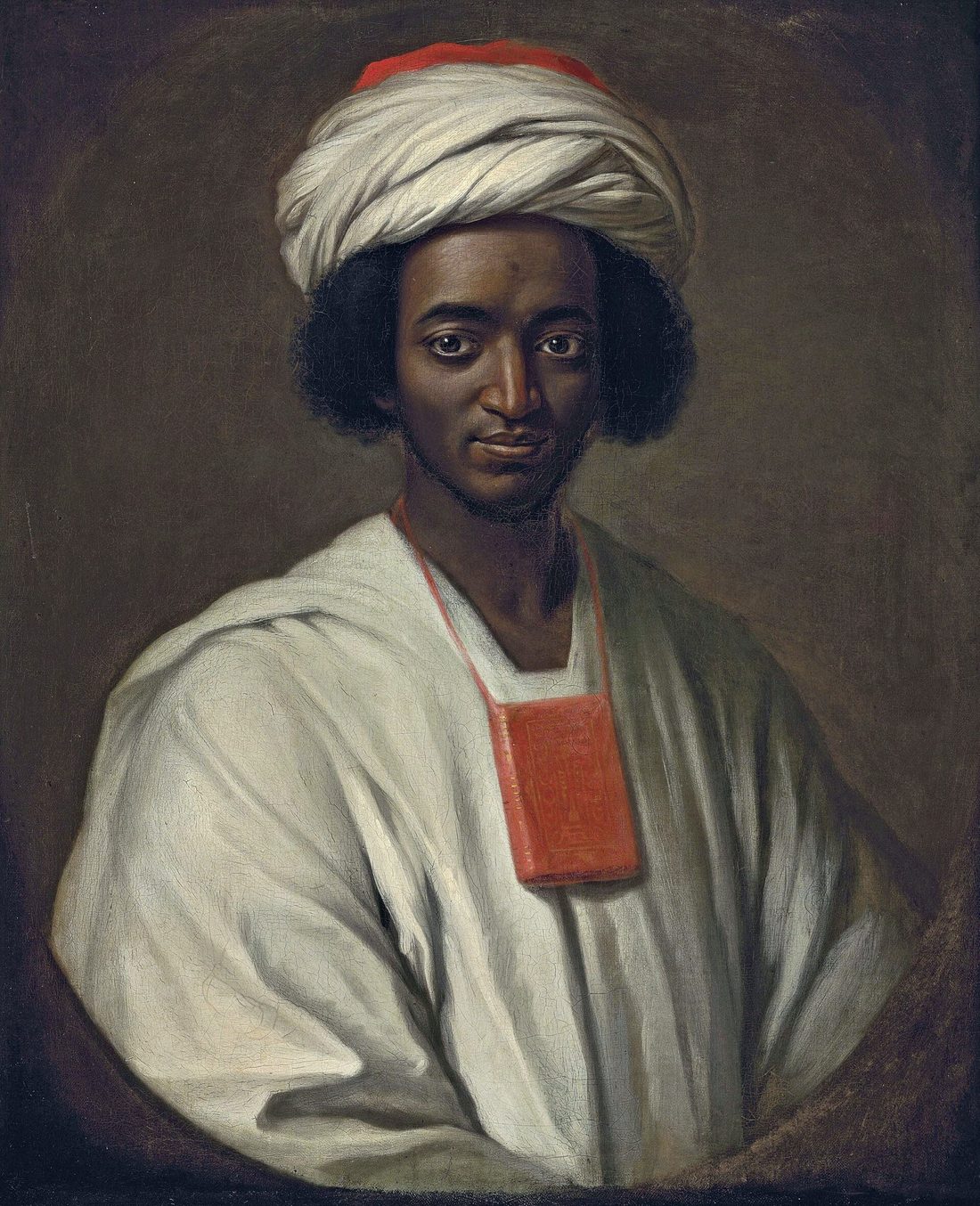
Ayuba Suleiman Diallo, from Bundu in today’s Senegal, was captured in 1730 and sold in Maryland. A letter he wrote in Arabic to his father reached men in London who could have it read. He was brought to England in 1733 and freed there, sat for his portrait, and went home in 1734.3
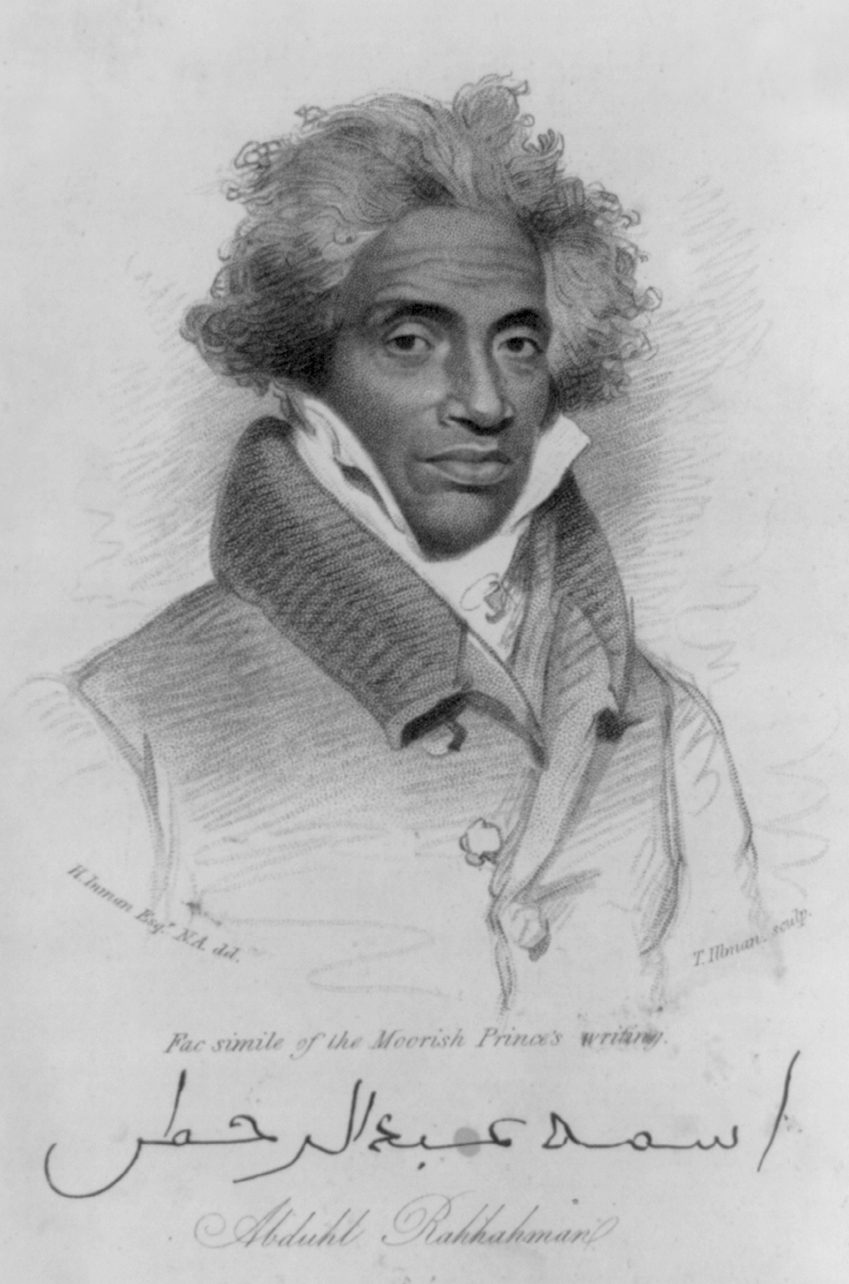
Abd al-Rahman Ibrahima, a prince of Timbo in Futa Jallon, was captured in 1788 and spent about forty years enslaved near Natchez, Mississippi. A letter in Arabic, sent by way of Morocco, brought his case to the secretary of state and the president. He was freed in 1828, sailed for Africa in 1829, and died in Liberia that year, within reach of home.11
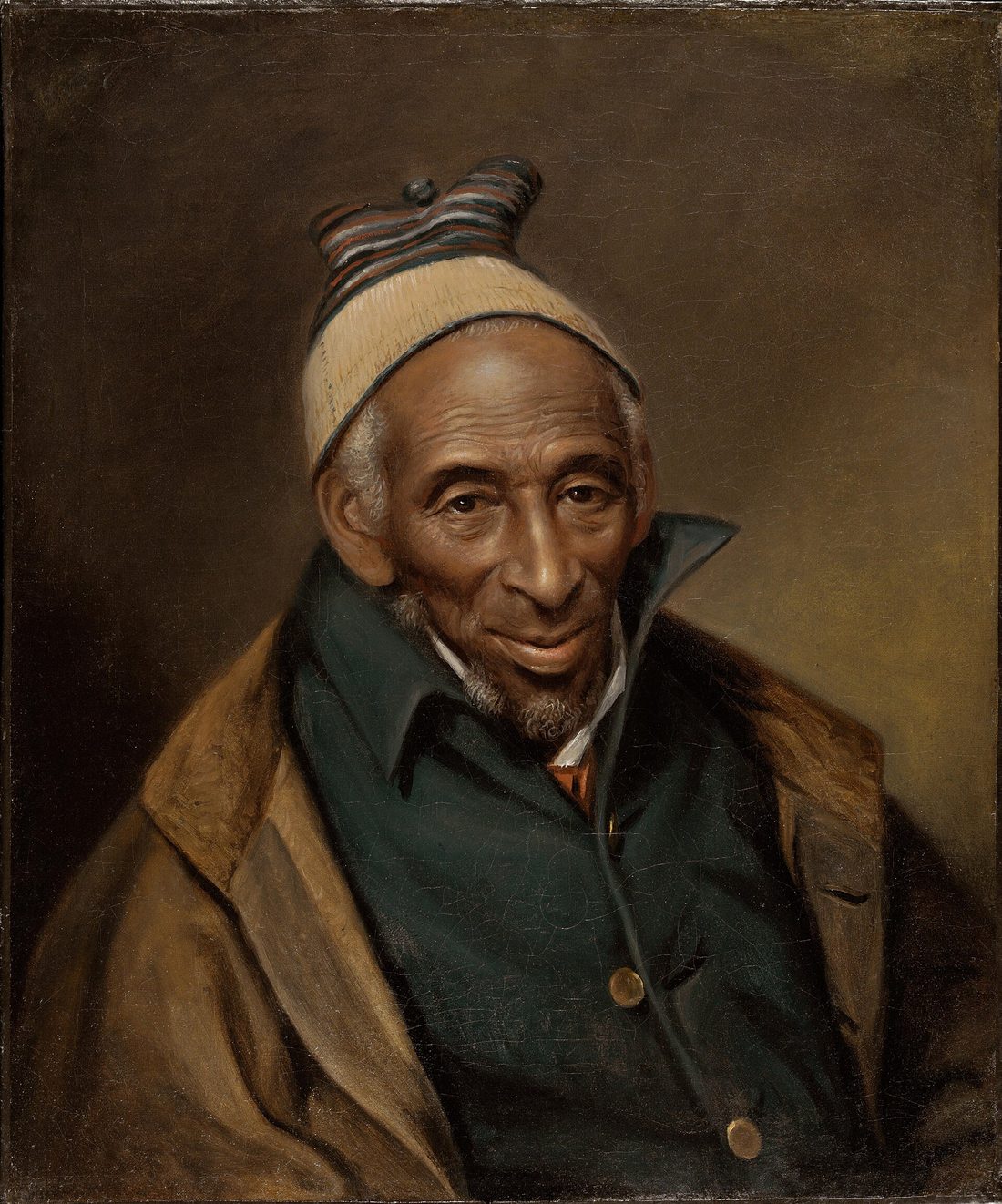
Yarrow Mamout was brought to Maryland about 1752, freed about 1796, and bought a house in Georgetown in 1800. In 1819 Charles Willson Peale, who had painted Washington, painted him.12
Lamine Kebe taught school in Futa Jallon before he was enslaved. Freed by 1834 after about thirty years, he sailed for Liberia in 1835. Omar ibn Said’s autobiography was sent to him.35
Mahommah Gardo Baquaqua, born about 1824 in Djougou in today’s Benin, was enslaved in Brazil, walked off a ship in New York in 1847, and published his life in Detroit in 1854.
And in Salvador, in the Brazilian province of Bahia, enslaved and freed African Muslims rose in January 1835, during Ramadan, in the most serious urban slave revolt in Brazil’s history. The authorities found amulets with Arabic prayers on the bodies of the dead.13
A petition in Charleston, 1790
One small document shows how visible Muslims were in early Carolina. The journal of the South Carolina House records that in January 1790 it heard a petition from four men and their wives who called themselves free Moors, subjects of the emperor of Morocco. The House resolved that they were not to be tried under the state’s slave code.1
Go and see
The International African American Museum stands on Gadsden’s Wharf in Charleston. The Omar ibn Said marker is on Murchison Road in Fayetteville, North Carolina, and Masjid Omar Ibn Sayyid stands on the same road. Sapelo Island is reached by ferry from Meridian, Georgia, by reservation, and Hog Hammock is still a living community, so go as a guest. Omar’s manuscript can be read page by page on the Library of Congress website. Check opening times before you travel.
Sources
- Sylviane A. Diouf, Servants of Allah: African Muslims Enslaved in the Americas (New York University Press, 1998; anniversary edition 2013).
- Michael A. Gomez, Black Crescent: The Experience and Legacy of African Muslims in the Americas (Cambridge University Press, 2005).
- Allan D. Austin, African Muslims in Antebellum America: Transatlantic Stories and Spiritual Struggles (Routledge, 1997).
- Library of Congress, Omar Ibn Said Collection, with the collection essay. loc.gov
- North Carolina Department of Natural and Cultural Resources, Highway Historical Marker I-89, “Omar ibn Said.” dncr.nc.gov
- Ala Alryyes, editor and translator, A Muslim American Slave: The Life of Omar Ibn Said (University of Wisconsin Press, 2011).
- The Pulitzer Prizes, 2023 Prize in Music: Omar, by Rhiannon Giddens and Michael Abels. pulitzer.org
- University of Georgia, Hargrett Rare Book and Manuscript Library, Bilali Muhammad document (ms2807). sclfind.galib.uga.edu
- New Georgia Encyclopedia, “Cornelia Bailey (1945 to 2017).” georgiaencyclopedia.org
- Georgia Writers’ Project, Drums and Shadows: Survival Studies among the Georgia Coastal Negroes (University of Georgia Press, 1940).
- Terry Alford, Prince Among Slaves (Oxford University Press, 1977; anniversary edition 2007).
- Philadelphia Museum of Art, Charles Willson Peale, Portrait of Yarrow Mamout (Muhammad Yaro), 1819. philamuseum.org
- Joao Jose Reis, Slave Rebellion in Brazil: The Muslim Uprising of 1835 in Bahia (Johns Hopkins University Press, 1993).
- Lowcountry Digital History Initiative, College of Charleston, African Muslims in the South. ldhi.library.cofc.edu
- Judith A. Carney, Black Rice: The African Origins of Rice Cultivation in the Americas (Harvard University Press, 2001).